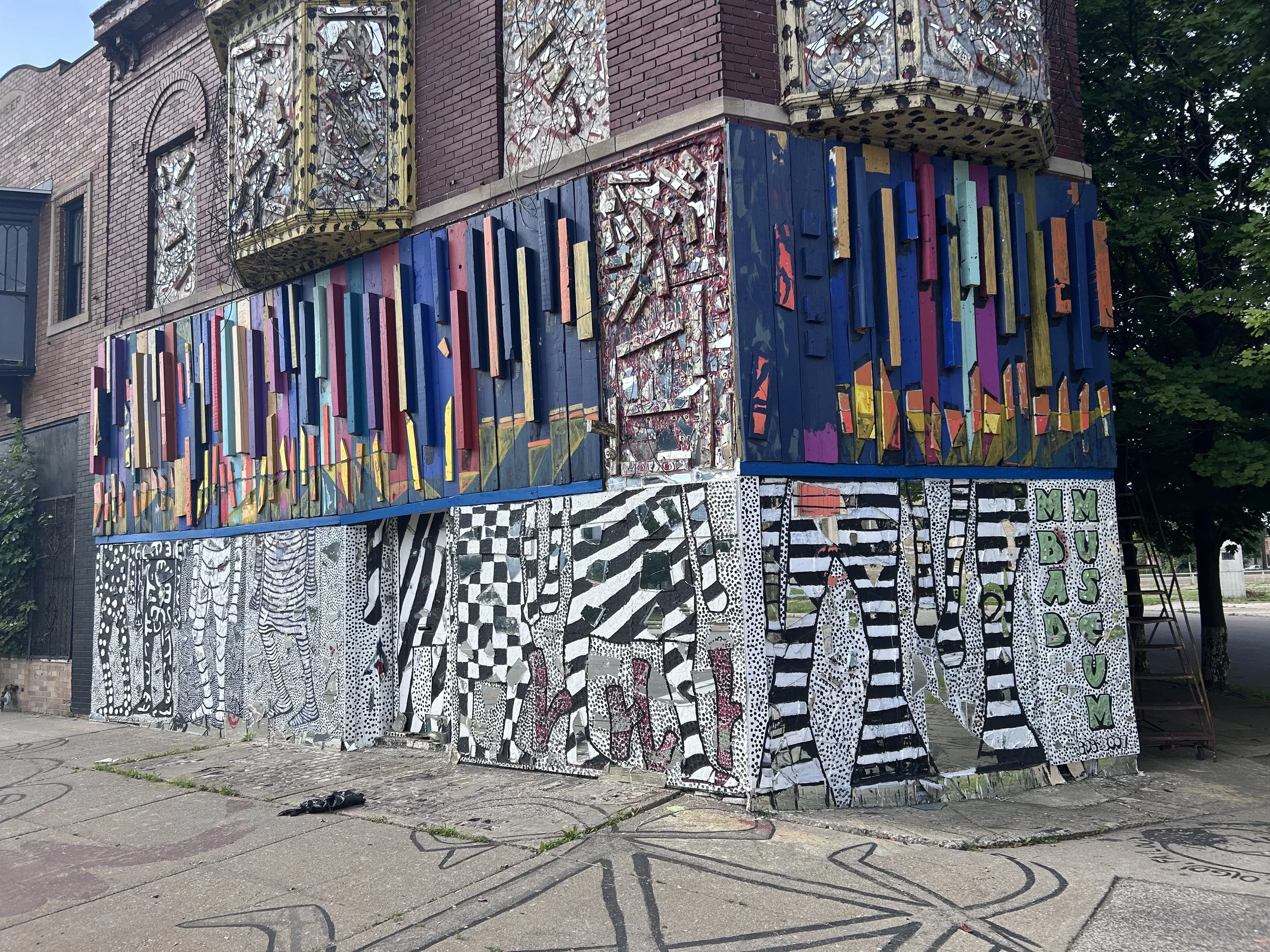
More than 30 years of beads, art, storytelling, and cultural preservation in Detroit.
MBAD African Bead Museum began with a belief that objects carry stories — and that preserving African material culture also means preserving the knowledge, histories, and traditions carried within it.
Founded by artist, storyteller, collector, and educator Olayami Dabls in 1994, MBAD began as an African bead gallery rooted in Dabls’ decades-long study and collection of beads and African material culture.
For Dabls, beads were never simply objects of adornment. They offered a way to understand history — tracing stories of artistry, trade, identity, spirituality, migration, and cultural exchange across the African continent and throughout the diaspora.
What began with beads would eventually grow into something much larger.
1994 — WHERE IT BEGAN
In 1994, Olayami Dabls established the African bead gallery that would become the foundation of MBAD African Bead Museum.
The gallery created a place where visitors could encounter African beads not only as beautiful objects, but as material records of culture and history. Through collecting, selling, teaching, and storytelling, Dabls shared the histories and meanings connected to the beads while continuing to expand his collection.
Commerce and cultural preservation existed side by side from the beginning — a relationship that remains central to MBAD today.
1998 — A HOME ON GRAND RIVER
In 1998, MBAD took root at the intersection of Grand River Avenue and West Grand Boulevard in Detroit.
What Dabls encountered there extended beyond the walls of a traditional gallery. Buildings, vacant lots, fences, discarded materials, and the surrounding landscape became part of an evolving artistic environment.
Over time, Dabls began transforming the property itself.
Iron, rocks, wood, mirrors, paint, beads, found materials, architecture, and landscape came together across the campus. Art moved outside of the gallery and into the environment, creating a place that could be walked through, experienced, reflected upon, and continually changed.
A MUSEUM WITHOUT WALLS
As MBAD grew, so did Dabls’ vision for what a museum could be.
The campus became home to monumental outdoor works, including Iron Teaching Rocks How to Rust, the African Language Wall, mirrored murals, sculptures, and installations that transformed the surrounding landscape.
Unlike a conventional museum, MBAD does not separate art from the environment around it.
Works change with weather and time. Iron rusts. Wood ages. Mirrors catch sunlight and reflect the people and neighborhood surrounding them. Buildings become canvases. Vacant land becomes a place for art and gathering.
The result is a living, evolving cultural environment where African material culture, contemporary art, storytelling, history, commerce, and community exist together.
BEADS AT THE HEART OF MBAD
Even as the museum expanded, African beads remained at its center.
Over more than three decades, the African Bead Gallery has continued to connect visitors with beads, jewelry-making materials, cultural objects, and traditions from across the African continent.
For some visitors, MBAD begins with a strand of beads.
For others, it begins with a mural, a sculpture, a story, or simply the unexpected discovery of the museum while traveling along Grand River.
Together, those experiences form the larger story of MBAD.
GROWING WITH DETROIT
MBAD has grown alongside the city that surrounds it.
What began as an African bead gallery has evolved into a cultural destination welcoming Detroit residents, artists, students, educators, families, scholars, collectors, and visitors from around the world.
Through exhibitions, storytelling, workshops, educational programs, partnerships, public art, and community gatherings, MBAD continues to create opportunities for people to encounter African and African diasporic culture in ways that are personal, tangible, and alive.
The museum’s growth has also extended beyond its original spaces. Arts Alley has created another place for art and gathering, while new educational initiatives such as the AfricanFuturist Greenhouse connect cultural knowledge with art, technology, design, and the imagination of a new generation.
MBAD TODAY
Today, MBAD encompasses the African Bead Gallery, museum spaces, monumental outdoor installations, the African Language Wall, Arts Alley, educational programming, workshops, and community gathering spaces.
But MBAD is more than the sum of those spaces.
It is the result of more than 30 years of collecting, creating, teaching, building, preserving, experimenting, and storytelling.
It remains an evolving place — rooted in the vision of its founder while continuing to grow as a cultural institution for the generations that follow.
THE NEXT CHAPTER
MBAD’s story is still being written.
Through the redevelopment of N’kisi House, expansion of educational and creative programming, preservation of the museum campus, and continued investment in artists and community, MBAD is building the infrastructure needed to carry its work forward.
The next chapter is not about leaving the museum’s history behind.
It is about protecting what has been built, creating room for what comes next, and ensuring that the stories, objects, art, and cultural knowledge at the heart of MBAD remain alive for future generations.